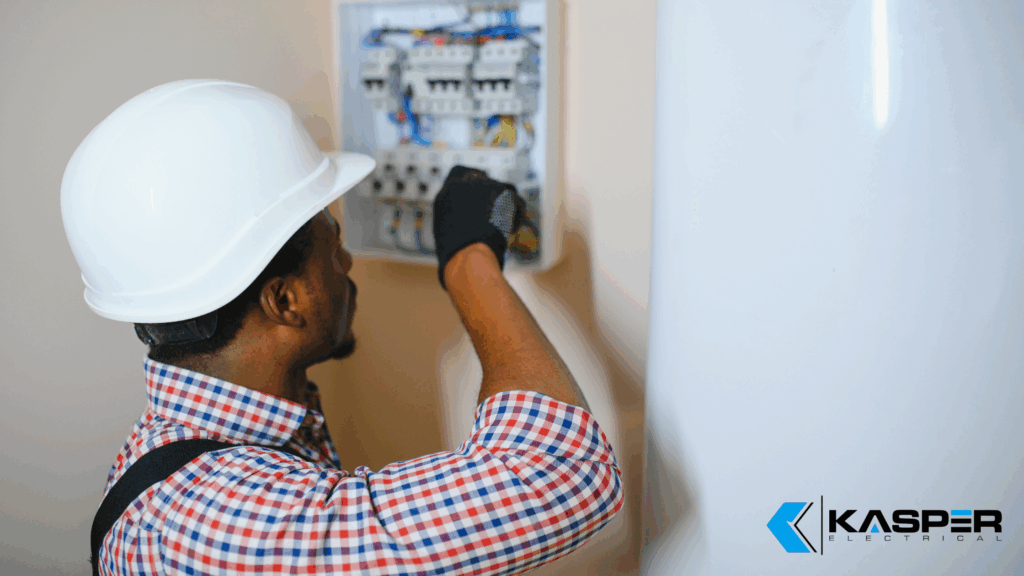
If your electrical panel is more than 20 years old, uses Federal Pacific or Zinsco breakers, or has never been professionally inspected, it may not be ready to handle the demands of a South Florida hurricane season. Here’s what every Palm Beach County homeowner needs to know before June 1st — and for a broader overview of storm prep, see our complete guide on preparing your home’s electrical system for hurricane season.
Why Hurricane Season Is Hard on Electrical Systems
Florida’s Atlantic hurricane season runs June 1 through November 30, and for South Florida homeowners, that’s not just a weather concern — it’s an electrical one. Storm surges, lightning strikes, power outages, and the sudden restoration of utility power after an outage all place significant stress on your home’s electrical panel and wiring.
When the power comes back on after a storm, it doesn’t always come back gently. Voltage fluctuations and surges during power restoration are among the most common causes of electrical damage to appliances, HVAC systems, and home electronics. A panel that’s already weakened by age or a history of tripped breakers is particularly vulnerable during these moments.
The good news is that most electrical vulnerabilities in a home can be identified and addressed before the season starts — if you know what to look for.
What to Inspect Before June 1st
A pre-hurricane electrical inspection should cover five key areas of your home:
-
Your Main Electrical Panel
Open the panel door and look for any of the following warning signs:
- Breakers that feel warm to the touch
- Burn marks, rust, or corrosion on breakers or bus bars
- Breakers that don’t snap firmly to the ON or OFF position
- A panel that hums, buzzes, or crackles
- Circuit labels that are missing, faded, or inaccurate
If your panel is a Federal Pacific Electric (FPE) Stab-Lok or a Zinsco panel, this is a critical concern. Both brands have documented safety issues and are no longer manufactured. Many insurance companies in Florida now require replacement as a condition of coverage. Learn more about when a panel upgrade is worth it and what electrical panel upgrade services involve.
-
Your Service Entrance and Weatherhead
The service entrance is where your home connects to the utility power line. Check that the weatherhead — the curved pipe on the outside of your home where utility wires connect — is securely attached and shows no signs of rust, separation, or physical damage. Storm winds can pull a weatherhead loose, creating a dangerous live wire situation.
-
GFCI and AFCI Protection
Ground Fault Circuit Interrupter (GFCI) outlets are required by code in bathrooms, kitchens, garages, and all outdoor areas. Arc Fault Circuit Interrupter (AFCI) breakers are required in most living areas in newer construction. Test every GFCI outlet using the TEST and RESET buttons. If any fail to trip or reset, replace them before storm season. For a complete home checklist, use our residential electrical safety checklist.
-
Whole-Home Surge Protection
A whole-home surge protector installs directly at your main panel and shields every circuit in your house from voltage spikes. Florida is the lightning capital of the United States, and a nearby lightning strike can send a surge powerful enough to destroy appliances and damage wiring throughout the home. Point-of-use power strips offer limited protection by comparison.
If you don’t have whole-home surge protection, this is one of the most cost-effective pre-season upgrades available. Learn more about whole-home surge protector installation and why whole-home surge protection is essential for Florida homes.
-
Outdoor Outlets and Fixtures
Inspect all outdoor outlets, junction boxes, and light fixtures for cracked covers, missing gaskets, or signs of water intrusion. Any outdoor outlet that isn’t covered by a weatherproof “in-use” cover should be addressed before heavy rain arrives.
When to Call a Licensed Electrician
Some inspection items above — like testing GFCI outlets — are safe for homeowners to do. Others require a licensed electrician. Call a professional if:
- Your panel is more than 20–25 years old and has never been inspected
- You have an FPE Stab-Lok or Zinsco panel
- You notice any burn marks, warm breakers, or unusual sounds from your panel
- Your home has aluminum wiring (common in homes built between 1965 and 1973)
- You want whole-home surge protection installed
- You’re planning to add a standby generator installation this season
A licensed electrical inspection typically takes 1–2 hours for a standard residential home and gives you a complete picture of your system’s condition before the storms arrive.
The Cost of Waiting
The most common reason homeowners delay an inspection is that their system seems to be working fine. But electrical problems are often invisible until they aren’t — and a panel failure during or after a storm is far more expensive and stressful to fix than a proactive inspection in May. If your inspection reveals a panel upgrade is needed, learn more about what that involves and what it costs in Palm Beach County
Schedule a Pre-Season Inspection
Kasper Electric Inc. has served Palm Beach County, Martin County, and surrounding South Florida communities since 1978. If you’re unsure about the condition of your home’s electrical system, schedule a professional electrical inspection — it’s the safest next step before June 1st.