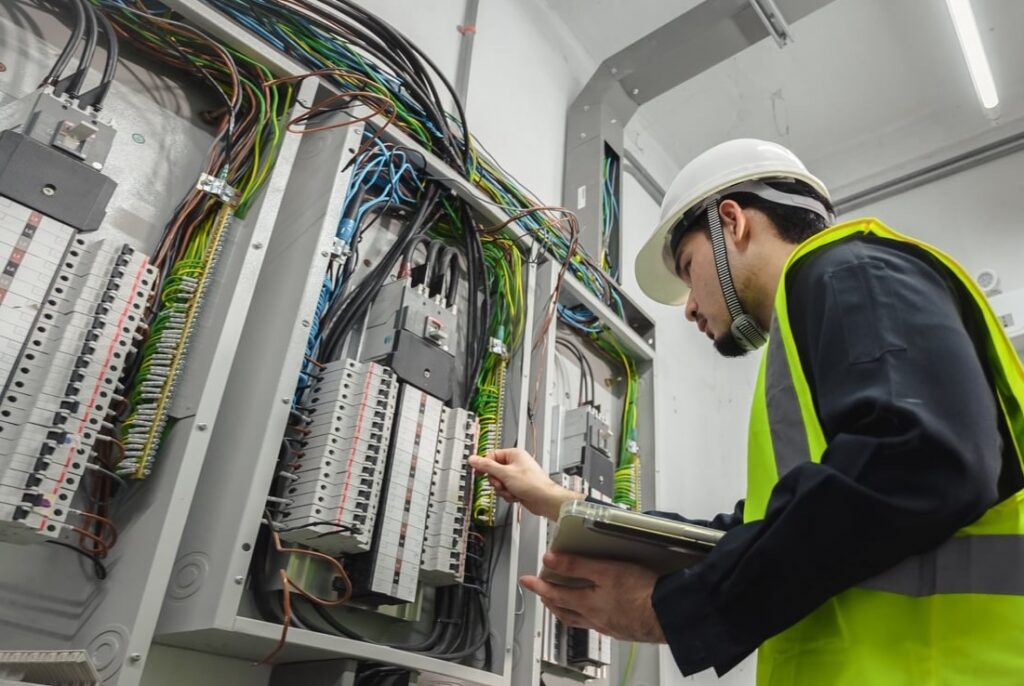
Every Florida commercial building is required by the National Electrical Code and Florida Building Code to maintain its electrical systems in a safe condition — but there is no universal mandate specifying exactly how often a private business must have its electrical system professionally inspected. That ambiguity leads many business owners to skip inspections entirely, which is one of the most avoidable risks in commercial property management.
What is a Commercial Electrical Safety Inspection?
A commercial electrical safety inspection is a comprehensive evaluation of a building’s electrical infrastructure performed by a licensed electrical contractor. It is distinct from a code inspection by a building department — this is a proactive assessment that identifies existing deficiencies, potential hazards, and components approaching end of life.
A thorough commercial inspection typically covers:
Electrical Panel and Distribution Equipment
- Panel condition, age, and capacity
- Breaker operation and labeling accuracy
- Bus bar condition, torque of connections
- Signs of overheating, arcing, or corrosion
- Grounding and bonding
Wiring and Circuits
- Visible wiring condition in mechanical rooms and accessible areas
- Appropriate circuit loading
- GFCI protection in required locations
- Dedicated circuits for equipment as required
Lighting Systems
- Exit and emergency lighting functionality
- Outdoor and parking lot lighting condition
Specialty Systems
- Generator and transfer switch operation
- Fire alarm panel electrical connections
- EV charging infrastructure if present
How Often Should a Commercial Property Be Inspected?
- Every 3–5 years for standard commercial occupancy (offices, retail, light industrial)
- Every 1–3 years for high-use or high-demand properties (restaurants, medical facilities, manufacturing)
- Before purchasing a commercial property — always
- After any significant renovation or addition
- After any storm event that resulted in flooding or major wind damage
- When new, high-draw equipment is being added
Properties subject to 40-year or 50-year recertification requirements must also include a full electrical inspection as part of that process.
Insurance and Liability Implications
Commercial property insurance carriers in Florida have become increasingly attentive to the condition of building electrical systems. Documented deficiencies that result in fires, equipment damage, or injuries can create significant liability for property owners — particularly when records show inspections were overdue. Maintaining documented inspection records is meaningful protection in the event of a claim.
What to Expect During an Inspection
A commercial inspection for a small to mid-size property typically takes 2–4 hours. The licensed electrician will:
- Review available electrical drawings or as-built documents
- Physically inspect all accessible panel and distribution equipment
- Test GFCI and emergency lighting systems
- Inspect wiring in accessible areas
- Review circuit loading and identify overloaded circuits
- Provide a written report detailing findings and recommended corrective actions
Kasper Electric has been performing commercial electrical inspections in Palm Beach and Martin Counties since 1978. To learn more, view our commercial electrical services and commercial construction electrical services.